
Robinson Helicopter Insurance
Tailored cover for Robinson helicopter owners, operators, flight schools, and commercial fleets.
Robinson helicopters are among the most widely used rotary aircraft in Australia, valued for their simplicity, cost-efficiency, and versatility across training, private, and commercial operations. But their widespread use doesn’t mean risk is uniform. From low-level aerial work to high-cycle training environments, Robinson helicopters face operating conditions that demand carefully structured insurance.
At AGL Aviation Insurance Brokers, we arrange cover that reflects how these aircraft are actually used, factoring in pilot experience, mission profile, and aircraft configuration. Our goal is simple: protect your aircraft, your operation, and your income when things don’t go according to plan.
Custom Insurance for Robinson Helicopters
Robinson helicopters have carved out a special niche in aviation. Models like the R22, R44, and R66 are widely used for training, charter, aerial work, and private flying. Their relatively low acquisition cost and straightforward maintenance make them accessible, but they are also high-utilisation aircraft, typically operating in demanding environments. That combination shapes how insurers assess risk.
Unlike fixed-wing aircraft, helicopters routinely operate at low altitude, land in confined areas, and perform tasks that involve frequent take-offs and landings. Robinson helicopters, in particular, are commonly used in flight schools and commercial work, which increases exposure compared to privately flown aircraft. Insurance needs to reflect this operational reality to be useful.
Tailored aircraft insurance is essential because not all Robinson operations are the same. A privately owned R44 used for occasional flights presents a very different risk profile from an R22 in a busy training school flying multiple sorties daily. Similarly, a turbine-powered R66 conducting charter or aerial work carries a different exposure compared to piston models. Pilot experience, recency, and training history also weigh heavily in underwriting decisions.
AGL Aviation has extensive experience placing insurance for Robinson helicopters across Australia. We work with operators ranging from solo private owners to large flight schools and commercial fleets. That experience allows us to anticipate insurers’ requirements, structure appropriate cover, and secure terms that reflect both the aircraft and how it is flown.


Why Robinson Helicopter Insurance is Essential
Robinson helicopters operate in environments that demand careful risk management. Insurance plays a direct role in protecting both the aircraft and the business behind it.
▶ Protection against accidents, damage, and liability
Helicopter operations inherently involve higher exposure to incidents such as hard landings, rotor strikes, or ground handling damage. Even minor events can result in significant repair costs, especially when rotor systems or structural components are involved. Liability exposure is also a major factor, particularly for charter and training operators carrying passengers or students. The right kind of aviation insurance ensures that both physical damage and third-party claims are financially manageable.
▶ Compliance with Australian aviation regulations
Operators in Australia must meet regulatory and contractual requirements, particularly when carrying passengers or conducting commercial operations. Liability insurance is often mandatory under contracts or operational approvals. Having appropriate cover in place helps ensure compliance with aviation regulations and protects operators from legal and financial consequences following an incident.
▶ Peace of mind for owners, pilots, and businesses
Running a helicopter operation involves constant decision-making around safety, scheduling, and maintenance. Insurance removes a significant layer of financial uncertainty. Whether it’s a private owner flying recreationally or a business relying on daily operations, having the right cover in place allows operators to focus on flying rather than potential financial setbacks.
Models of Robinson Helicopters We Typically Insure
AGL Aviation arranges insurance for the full range of Robinson helicopters commonly operated in Australia. These aircraft vary in performance, usage, and complexity, which directly affects how insurance is structured.
From the widely used R22 in flight training environments to the versatile R44 and the turbine-powered R66, each model presents different underwriting considerations. Factors such as payload capacity, engine type, operational role, and pilot experience all influence how insurers assess risk.
Our approach is to align coverage with the specific model and its intended use, so that policies reflect real-world operations and not generic assumptions
| Robinson Aircraft Category | Common Models | Typical Use & Coverage |
|---|---|---|
| Light Piston Helicopter (2–4 seat) |
Robinson R22 Robinson R44 |
|
| High-Performance Piston Helicopter | Robinson R44 Raven I / II |
|
| Turbine Helicopter | Robinson R66 |
|
What Robinson Helicopter Insurance Can Cover
Robinson insurance can be structured to address a wide range of operational risks. Coverage is typically tailored to the aircraft, its use, and the operator’s requirements.
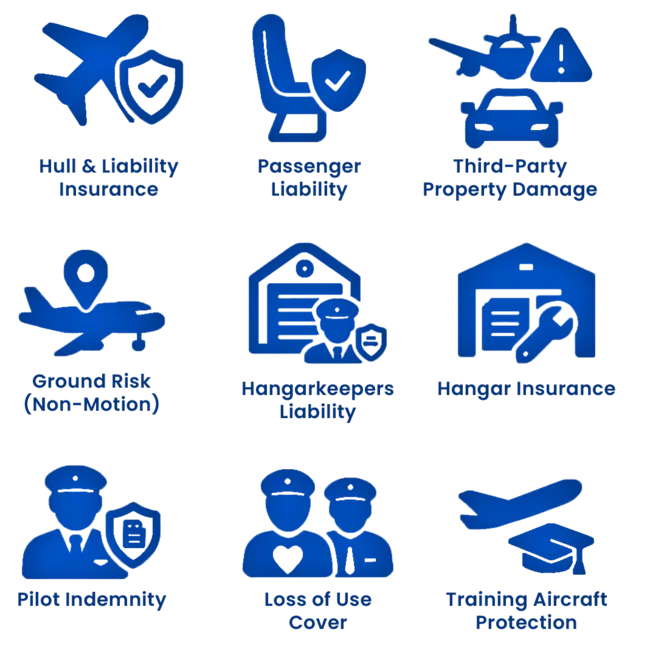
▶ Hull Insurance (flight, taxiing, ground risks)
Hull insurance covers accidental physical damage to the helicopter while in flight, during taxiing, parked, or undergoing ground handling. For helicopters, this includes risks such as rotor strikes, hard landings, and ground handling incidents. Policies are often written on an agreed value basis, ensuring clarity about the insured value in the event of a total loss.
▶ Passenger and Third-Party Liability
Liability insurance protects against claims for bodily injury or property damage caused to third parties. This is particularly relevant for helicopter operations, which often take place in populated or confined areas. Higher liability limits are typically recommended for charter and commercial operations where passenger exposure is significant.
▶ Private, Business, and Commercial Use
Policies can be structured to reflect how the helicopter is used, whether for private recreational flying, business travel, or commercial operations. Declaring the correct usage is essential, as insurers assess risk differently for each category. Misaligned coverage can lead to claim disputes or coverage gaps.
▶ Training / Flight School Operations
Flight training is one of the most common uses for Robinson helicopters, particularly the R22. Insurance for training operations accounts for student pilots, frequent sorties, and instructor liability. Policies may include specific conditions around minimum instructor experience and student supervision.
▶ Charter or Hire and Reward (If Eligible)
Helicopters used for charter or hire-and-reward require specialised insurance due to passenger carriage and commercial exposure. Coverage can include passenger liability, operational risks, and higher utilisation. Insurers typically assess pilot qualifications and operational procedures closely before approving this type of use.
▶ Hangar, Tools, and Spare Parts
Operators often hold spare parts, tools, and ground equipment essential for maintenance. Insurance can extend beyond the aircraft to cover these assets against theft, damage, or loss, particularly for operators managing their own maintenance or who are operating from private facilities.
▶ Avionics, Mods, and Equipment Upgrades
Many Robinson helicopters are fitted with upgraded avionics, GPS systems, or specialised equipment for aerial work. These additions increase the aircraft’s insured value and should be specifically noted in the policy. Coverage ensures that these components are included in the event of damage or loss.
▶ Optional: Loss of Use, Aerial Work extensions, Survey, and Photography
Optional extensions can cover income loss when the helicopter is grounded due to a claim. Additional endorsements may apply for aerial work, such as surveying, photography, or external load operations. These extensions are particularly relevant for commercial operators relying on consistent aircraft availability.
Aerial Mustering Insurance for R22 and R44 Helicopters
Aerial mustering is one of the most demanding uses for helicopters in Australia. Operating at low altitudes in remote and rugged environments, aircraft like the Robinson R22 and R44 are relied on for their agility and efficiency. These conditions create a unique risk profile that standard aviation insurance doesn’t always fully address.
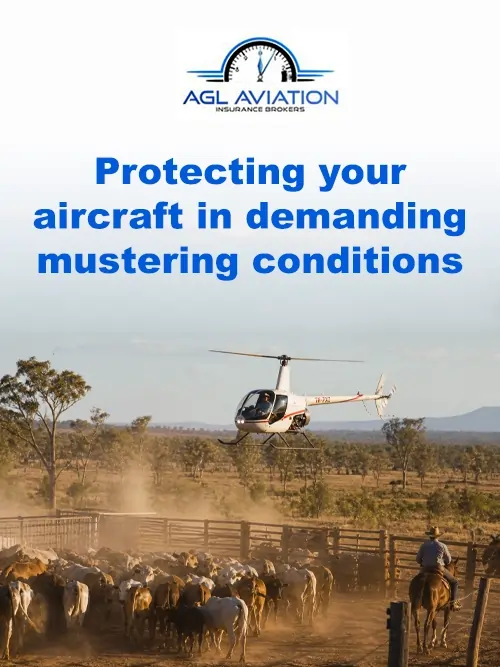
Unlike private or charter flying, mustering involves sustained low-level work, long hours in the air, and exposure to challenging terrain and weather. Insurance needs to reflect how these aircraft are actually used.
At AGL Aviation, we arrange cover specifically tailored to aerial mustering operations, taking into account:
▶ Low-level flying exposure and operating conditions
▶ Pilot experience, hours on type, and mustering background
▶ High utilisation during peak mustering seasons
▶ Remote operations, refuelling, and maintenance logistics
▶ Increased wear and risk associated with R22 and R44 use
Our goal is simple: structure Robinson helicopter insurance that responds to real-world mustering operations — protecting your aircraft, your work, and your income.
What Influences the Cost of Robinson Helicopter Insurance?
Robinson insurance pricing is influenced by a combination of aircraft, pilot, and operational factors instead of a single fixed rate.
- Aircraft Factors
- Pilot Factors
- Operational Factors
- Model, year, and hull value: Higher-value helicopters attract higher premiums due to increased repair and replacement costs. For example, an R66 turbine helicopter represents significantly greater financial exposure than an older R22. Newer aircraft may also entail more expensive parts and specialised maintenance requirements.
- Avionics upgrades: Upgraded avionics increase the insured value and can raise repair costs following damage. While modern systems improve situational awareness and safety, they often involve complex components that are costly to replace or repair after an incident.
- Hangar vs tiedown storage: Helicopters stored in hangars generally receive more favourable terms due to reduced exposure to weather damage, rotor blade wear, and ground incidents. Aircraft parked outdoors are more exposed to wind, debris, and environmental wear, which increases risk.
- Pistons vs turboprops (higher risk profile): While most Robinson helicopters are piston-powered, the R66 turbine model carries higher premiums due to its performance capability, engine value, and typical commercial use. Turbine aircraft often operate in more demanding roles, which increases underwriting exposure.
- Total flight hours: Higher total flight time generally indicates greater pilot experience, which can positively influence premiums. For helicopters, insurers pay close attention to overall rotary-wing experience rather than fixed-wing hours.
- Hours on type: Time flying specifically on Robinson helicopters is a key consideration. Insurers look favourably on pilots with substantial experience on the specific model being insured, particularly for aircraft like the R44 or R66.
- IFR or advanced ratings: While most Robinson operations are conducted under VFR, additional instrument ratings and formal training demonstrate a higher level of competency. This can improve insurer confidence, particularly for commercial or complex operations.
- Recency of experience: Pilots who fly regularly are generally seen as lower risk compared to those returning after long breaks. Recent flight activity indicates current proficiency, which is especially important in helicopter operations.
- Charter, training, private flying: Training and charter operations typically attract higher premiums due to increased utilisation and passenger exposure. Private recreational flying generally carries lower risk and more favourable pricing.
- Remote-area strips: Operations into remote or unprepared landing areas increase risk, particularly for helicopters conducting aerial work. Terrain, limited infrastructure, and emergency response considerations all affect underwriting.
- Commercial mission profiles: Specialised operations such as aerial surveying, mustering, or firefighting involve unique risks. These missions often require additional underwriting review and tailored policy terms to reflect operational complexity.
Robinson Helicopter Insurance Cost (Indicative Only)
Note: These are general aviation market estimates only. Actual premiums vary based on hull value, pilot experience, claims history, usage (private vs commercial), location, and insurer appetite.
| Robinson Aircraft Category | Example Models | Estimated Premium Range Per Annum (AUD) | Remarks |
|---|---|---|---|
| Light Piston Helicopter | R22 | ~$4,000 – $10,000 |
|
| Mid-Range Piston Helicopter | R44 | ~$6,000 – $18,000 |
|
| Turbine Helicopter | R66 | ~$18,000 – $55,000+ |
|
Need a price for insuring your Robinson?
Contact us today to receive a personalised insurance quote and expert guidance for your specific aircraft and operation.
➜ Learn more about Aircraft Insurance Costs
How to Get the Best Robinson Helicopter Insurance in Australia
Choosing the right policy goes well beyond comparing prices. The structure of the cover matters just as much as the premium.
▶ Work With a Specialist Aviation Broker (Not a General Insurer)
Aviation brokers understand helicopter operations, pilot requirements, and insurer expectations. This knowledge helps you avoid gaps in cover and ensures policies reflect how the aircraft is actually used.
▶ Compare Policies Through a Broker Who Has Access to Multiple Insurers
Different insurers assess helicopter risks differently. A broker can compare terms, exclusions, and pricing across multiple underwriters, helping secure more competitive and suitable coverage.
▶ Customise Your Coverage to Match Your Flying
The accurate disclosure of usage, pilot experience, and aircraft configuration ensures the policy responds correctly. Tailored coverage reduces the risk of disputes and ensures claims are handled as expected.
▶ Review and Update Your Policy Regularly
Aircraft values, pilot experience, and operational use change over time. Regular reviews help ensure your aircraft always gets the appropriate coverage and prevent under-insurance or outdated policy terms.

Why Choose AGL Aviation for Your Robinson Helicopter Insurance
AGL Aviation focuses exclusively on aviation insurance, providing practical advice backed by industry experience and direct insurer access.
- 30+ years of aviation insurance experience: Our experience covers private helicopter ownership through to complex commercial operations, allowing us to assess risk accurately and structure policies that reflect real-world flying conditions.
- Australia-wide aviation specialist broker: We work with Robinson helicopter operators across metropolitan, regional, and remote Australia, including those located in Perth, Melbourne, Brisbane, Adelaide, Sydney, Canberra, Darwin, and Tasmania. This ensures your coverage aligns with local operating environments and regulatory requirements.
- Access to multiple Australian and international insurers: Our network includes both domestic and international underwriters, allowing placement of higher-value or complex helicopter risks that may not fit standard market offerings.
- Tailored advice for private, training, charter, and commercial operations: We structure policies based on how your helicopter is used, including pilot qualifications, operational demands, and aircraft configuration, rather than relying on generic templates.
- Fast claims support and personal service: When incidents occur, we work directly with insurers and assessors to manage the claims process efficiently, helping reduce downtime and keep your operation moving.
You Might Also Be Interested In
Protect Your Robinson Helicopter With Specialist Aviation Insurance
Get a Quote From AGL
Speak directly with an aviation insurance expert who understands your aircraft, your operation, and your risk profile.
Fill Out Our Form for Your Custom Aviation Insurance Quote Today
Frequently asked questions
Common Questions About Insuring a Robinson Helicopter
Premiums vary widely depending on the model, pilot experience, and usage. An R22 used for private flying may cost significantly less to insure than an R66 used for charter or aerial work.
Training operations usually attract higher premiums due to frequent use and student pilots. Insurers assess instructor experience, student supervision, and operational procedures when determining pricing.
Yes, most insurers require minimum hours on type, particularly for R44 and R66 models. Additional training or endorsements may also be required for newer or less experienced pilots.
Yes, hull insurance generally covers accidental damage such as rotor strikes or ground-handling incidents, subject to policy terms and conditions. Proper reporting and maintenance records are often required.
Yes, but the operation must be declared and approved by insurers. Additional conditions, higher liability limits, and pilot requirements usually apply for commercial use.
Didn’t find the answers to your questions? Don’t hesitate to contact us.