
Cirrus Insurance With Expert Aviation Underwriting
Custom cover for Cirrus owners, operators, flight schools, and commercial fleets
Cirrus aircraft have reshaped modern general aviation. They attract owners who value safety, performance, and smart design. Features like their advanced avionics and whole-airframe parachute systems have made them stand out. However, those same features also change how insurers assess risk.
At AGL Aviation Insurance Brokers, we arrange Cirrus aircraft insurance that reflects how these aircraft are actually flown in Australia. Whether you own a privately flown SR22, operate a training aircraft, or manage a small commercial fleet, we structure policies that align with aircraft value, pilot experience, and operational use. Our role is to make sure your cover keeps pace with the technology and expectations that come with owning a Cirrus.
Insurance for Aircraft Known Worldwide for Safety Innovation
Cirrus aircraft are widely recognised for embedding safety into aircraft design rather than treating it as an add-on. Features such as the Cirrus Airframe Parachute System (CAPS), energy-absorbing landing gear, advanced avionics, and envelope protection have reshaped how pilots manage risk in real-world operations.
From an insurance perspective, these innovations influence both accident outcomes and claim severity. Cirrus aircraft are often flown by private owners, training organisations, and commercial operators who value predictable handling, strong situational awareness, and built-in safeguards. However, advanced safety systems also introduce higher asset values and technical complexity, so specialised insurance is essential to properly reflect both the reduced risk profile and the increased repair considerations for Cirrus aircraft.
AGL Aviation works extensively with technically advanced aircraft, including high-performance piston aircraft and turboprop operations. We understand how glass cockpits, integrated autopilots, and safety systems influence both risk and insurer expectations. That experience enables us to accurately position Cirrus risks and negotiate suitable aircraft insurance terms relevant for private owners, syndicates, flight schools, advanced training organisations, and approved charter or business operators, because each group faces different risk exposures.


Why Cirrus Insurance Is Essential
Cirrus aircraft combine performance with advanced systems, which bring unique insurance considerations beyond those of legacy GA aircraft. With Cirrus insurance, you get:
▶ Protection against accidents, damage, and liability
Hull insurance protects against damage during flight, taxi, and ground operations, including incidents involving avionics or composite structures. Liability cover protects owners and operators against claims from passengers or third parties, which can arise even from minor incidents. Given Cirrus aircraft values, uninsured losses can lead to financially severe consequences.
▶ Compliance with Australian aviation requirements
Civil Aviation Safety Authority (CASA) requirements, lender conditions, and airfield access often require minimum insurance levels. Cirrus owners (or any aircraft, for that matter) operating without suitable cover can ground an aircraft or breach contractual obligations. A properly structured policy helps ensure you remain compliant without unnecessary inclusions.
▶ Peace of mind for owners and operators
Cirrus owners often invest heavily in training and equipment. Insurance provides financial certainty, so aircraft owners, pilots, and aviation businesses can operate confidently without worrying about how a single incident could affect long-term viability.
Models of Cirrus We Typically Insure
Cirrus aircraft span a wide range of performance levels, including early piston models and pressurised turboprops. Insurance requirements differ significantly between models based on speed, complexity, and intended use.
AGL Aviation arranges cover across the Cirrus range, accounting for differences in hull value, systems, and operational roles. Our policies are structured to suit both privately operated aircraft and those used for training, business, or approved commercial purposes.
| Cirrus Aircraft Category | Common Models | Typical Use & Coverage |
|---|---|---|
| Single-Engine Piston |
Cirrus SR20 Cirrus SR22 Cirrus SR22T |
• Popular for private flying, owner-pilots, and advanced personal transport. • Commonly used for IFR touring and cross-country operations. • Coverage available for private owners, training, and limited commercial use (where approved). • Options for hull, liability, passenger cover, and hangar or storage. • Insurers place strong emphasis on transition training and recency due to performance characteristics. |
| Single-Engine Turboprop | Cirrus SF50 Vision Jet |
• Designed for personal jet ownership and owner-flown operations. • Used primarily for business travel and private transport rather than charter (unless specifically approved). • Coverage typically requires formal type training, simulator time, and minimum experience thresholds. • Higher liability limits available; optional cover for international operations and business use. • Premiums influenced by hull value, pilot experience, and operating environment. |
What Cirrus Insurance Can Cover
Cirrus insurance policies are modular by design. The coverage AGL Aviation offers can be structured to match actual operations rather than forcing aircraft into fixed or general categories.
▶ Hull Insurance (Flight, Taxiing, Ground Risks)
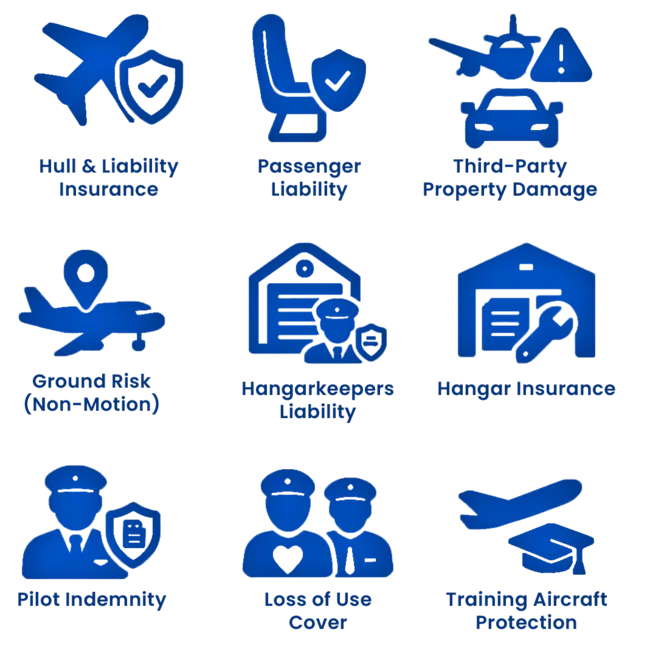
Hull cover protects the aircraft against physical damage during all phases of operation. This includes flight incidents, taxi damage, hangar mishaps, and weather-related events. Given the aircraft values of Cirrus units and their composite construction, accurate hull valuation is a necessity.
▶ Passenger and Third-Party Liability
Liability insurance covers legal claims for injury or property damage involving passengers or third parties. Cirrus aircraft are often flown with family members or business associates onboard, so making the appropriate passenger limits is especially important.
▶ Private, Business, and Commercial Use
Policies can be structured for private recreational flying, business travel, or approved commercial operations. Each use type carries a different exposure and pricing. Declaring correct use can help you avoid claim disputes and ensure the policy functions as expected.
▶ Training / Flight School Operations
Cirrus aircraft used for transition training or advanced instruction require specialised cover. Policies can include instructor liability, student pilots, and higher utilisation rates common in structured training environments.
▶ Charter or Hire and Reward (If Eligible)
Where permitted, Cirrus aircraft used for charter or hire-and-reward require additional underwriting. AGL Aviation insurers assess pilot qualifications, maintenance programs, and operational oversight before approving this use.
▶ Hangar, Tools, and Spare Parts
Coverage can extend beyond the aircraft itself to include hangar contents, maintenance tools, and spare parts. This is particularly relevant for owner-operators and training organisations managing their own equipment.
▶ Avionics, Modifications, and Upgrades
Cirrus aircraft often carry high-value avionics packages. Policies can reflect upgraded equipment. This means that repair or replacement costs are properly insured following damage or electrical incidents.
▶ Optional Extensions: Loss of Use, Aerial Work, Survey, and Photography
Optional covers may include loss of use, approved aerial work, or survey and photography endorsements, where applicable. At AGL Aviation, these extensions are evaluated carefully to ensure alignment with insurer risk appetite.
Key Drivers of Cirrus Insurance Costs
Cirrus insurance pricing is affected by how risk presents itself across the aircraft, the pilot, and the way the aircraft is actually used. Insurers assess the entire operating picture rather than implementing a flat rate.
- Aircraft Factors
- Pilot Factors
- Operational Factors
- Model, year, and hull value: Cirrus premiums rise with hull value because higher-value aircraft cost more to repair or replace after an incident. Newer models, such as later-generation SR22s or Vision Jets, feature advanced materials, integrated systems, and proprietary components. While these features improve performance and safety, they also increase parts costs, labour time, and reliance on manufacturer-approved repair facilities, all of which affect insurer exposure. This means that Cirrus SR22 insurance may cost more than that of other, less expensive single-engine models.
- Avionics upgrades: Newer Cirrus aircraft models often carry full glass cockpits, integrated autopilots, synthetic vision, and envelope protection systems. These upgrades increase an aircraft’s insured value and can significantly raise repair costs even after minor incidents, such as lightning strikes or electrical faults. Insurers account for both the replacement value of avionics and the specialist labour required to diagnose and repair them.
- Hangar vs tiedown storage: Where an aircraft is stored has a direct impact on risk. Hangared Cirrus aircraft face lower exposure to hail, UV damage, wind events, and ground handling incidents. Aircraft regularly tied down outdoors are more vulnerable to weather-related claims and cosmetic damage, which insurers factor into pricing and, in some cases, higher deductibles.
- Pistons vs turboprops: Piston-powered Cirrus aircraft generally attract lower premiums than turboprop or jet variants. Turbine aircraft operate at higher speeds, higher altitudes, and often under more demanding mission profiles. Their increased performance, system complexity, and higher hull values result in greater claim severity, which insurers reflect through higher premiums and stricter underwriting requirements.
- Total flight hours: Total flight time remains a strong indicator of pilot proficiency, so it can influence SR20 insurance costs (or that of any other aircraft model, for that matter). Pilots with higher hours typically demonstrate better decision-making and situational awareness, especially in abnormal or challenging situations. For Cirrus aircraft, which are often classified as high-performance, insurers place additional weight on a pilot’s accumulated experience rather than minimum licence requirements alone.
- Hours on type: Experience in specifically operating Cirrus aircraft is critical. Transitioning from conventional GA aircraft to a Cirrus involves adapting to higher cruise speeds, advanced avionics, and different energy management factors. Underwriters closely examine hours on type, especially for SR22, turbocharged variants, or turbine models, as lower time spent can increase the likelihood of claims at the early stages of ownership.
- IFR or advanced ratings: Instrument ratings and formal advanced training generally improve insurer confidence. Cirrus aircraft are frequently flown under instrument flight rules (IFR), and insurers prefer pilots who are properly trained and current rather than operating under visual rules alone. A pilot’s completion of recognised Cirrus training programs may also influence coverage terms, particularly for newer owners or higher-performance variants.
- Recency of experience: How recently a pilot has been flying matters almost as much as their total time. Pilots with extended periods of inactivity may face higher premiums or training requirements before cover is bound. Regular recent flying indicates maintained proficiency, which insurers view as presenting a lower risk profile, particularly for complex aircraft.
- Charter, training, private flying: Private-use Cirrus aircraft generally attract the lowest premiums. Training and charter operations increase exposure because of higher utilisation, multiple pilots, and repetitive cycles, such as take-offs and landings. These operations also involve passengers or students, which, in turn, increases liability exposure, so insurers factor this into price accordingly.
- Remote-area strips: Operations into short, unsealed, or remote airstrips can entail additional risks, including limited emergency services, challenging terrain, and variable surface conditions. Even well-equipped Cirrus aircraft face higher claim potential in such environments, particularly for ground damage and landing incidents.
- Commercial mission profiles: Commercial operations such as air taxi, business-critical travel, or specialised missions are more closely scrutinised. Tight schedules, weather pressures, and operational demands can increase risk. Insurers assess how the aircraft is used on a day-to-day basis, not only on how it is described on paper, when calculating premiums and determining coverage terms.
Typical Cirrus Insurance Costs by Aircraft Category
Cirrus insurance premiums can differ significantly based on the specific model, aircraft complexity, and how the aircraft is operated. The table below outlines indicative annual premium ranges for common Cirrus models, together with the main factors insurers check when determining risk exposure and pricing.
| Cirrus Aircraft Category | Example Models | Estimated Premium Range Per Annum (AUD) | Remarks |
|---|---|---|---|
| Single-Engine Piston | SR20 / SR22 | $3,000 – $8,000 | Higher performance and avionics complexity than typical trainers; premiums influenced by pilot total hours, transition training completion, and IFR use |
| High-Performance Single Piston | SR22T | $5,000 – $12,000 | Turbocharged engine and higher hull value increase exposure; insurers often require formal Cirrus transition training and recent experience |
| Single-Engine Jet | SF50 Vision Jet | $12,000 – $22,000+ | Very high hull value and jet operations; premiums driven by simulator training, minimum experience thresholds, liability limits, and operational profile |
Need a price for insuring your Cirrus?
Contact us today to receive a personalised insurance quote and expert guidance for your specific aircraft and operation.
➜ Learn more about Aircraft Insurance Costs
How to Get the Best Cirrus Insurance in Australia
Securing the right Cirrus insurance is not simply about finding the lowest premium, but about structure and suitability.
▶ Work With a Specialist Aviation Broker
Aviation insurance brokers understand aircraft systems, pilot licensing pathways, and insurer underwriting criteria. Unlike general insurers, they know the differences between aircraft models, training requirements, and operational risks, so you can expect to get tailored, correctly worded policies from the outset.
▶ Access Multiple Insurers
Not all underwriters view Cirrus aircraft the same way. Some focus on private ownership, while others specialise in training or commercial use. A broker with access to multiple Australian and international insurers can compare pricing, coverage scope, and exclusions to find the best overall fit for you.
▶ Match Cover to Actual Operations
Insurance must reflect how each aircraft is truly flown. Declaring accurate usage, pilot details, training activity, and avionics upgrades reduces hassles and ensures claims are paid without dispute. Understating use or omitting changes to an aircraft can lead to coverage gaps or the denial of claims.
▶ Review and Update Your Policies Regularly
Aircraft values, pilot experience, and operating patterns can change. Regular policy reviews can help your insurer adjust hull values, remove unnecessary restrictions, and ensure premiums reflect current risk. This prevents under-insurance as values rise or outdated terms that no longer reflect your operation.

Why Choose AGL Aviation for Your Cirrus Insurance
AGL Aviation specialises exclusively in aviation insurance, with a focus on practical, real-world risk management.
- 30+ years of aviation insurance experience: AGL Aviation brings decades of experience across private GA, flight training, charter, and complex commercial operations. This background allows us to provide informed advice on policy structure, insurer expectations, and risk mitigation for Cirrus operators.
- Australia-wide specialist broker: AGL Aviation works with Cirrus owners and operators across Australia, including Perth, Melbourne, Brisbane, Adelaide, Sydney, Canberra, Darwin, and Tasmania. This national perspective ensures policies account for local operating environments, regulatory requirements, and insurer preferences.
- Access to Australian and international insurers: Some Cirrus risks (particularly higher-value aircraft or commercial operations) require broader market access. AGL Aviation works with both domestic and international underwriters, enabling the placement of complex risks that may fall outside standard markets.
- Advice tailored to how you fly: Rather than applying generic assumptions, AGL Aviation structures policies around actual aircraft use. Whether the aircraft is privately owned, used for training, or operating commercially, coverage is aligned with actual operational needs.
- Responsive claims support and personal service: When incidents happen, direct support matters. AGL Aviation assists clients through the claims process, liaising with insurers, assessors, and repairers to reduce delays and operational downtime.
You Might Also Be Interested In
Protect Your Cirrus With Specialist Aviation Insurance
Get a Quote From AGL
Speak directly with an aviation insurance expert who understands your aircraft, your operation, and your risk profile.
Fill Out Our Form for Your Custom Aviation Insurance Quote Today
Frequently asked questions
Common Questions About Insuring Cirrus Aircraft
Cirrus ownership comes with unique insurance considerations—these FAQs explain what affects your cover and premium.
In many cases, yes. Cirrus aircraft typically have higher hull values than comparable piston singles because of their advanced technological features. That said, pricing continues to be strongly influenced by pilot hours, Cirrus-specific training, and how the aircraft is used.
Insurers do take the Cirrus Airframe Parachute System (CAPS) into account during risk assessment, particularly when reviewing loss history and survivability outcomes. However, CAPS alone doesn’t guarantee lower premiums. Underwriters still focus on pilot decision-making, training compliance, and how the aircraft is operated in practice.
Yes, Cirrus aircraft can be insured for training, including transition and recurrent training, as long as the operation is clearly disclosed. Insurers will assess instructor experience, student exposure, utilisation levels, and adherence to approved training programs before offering terms.
Hull insurance may respond to avionics damage caused by a sudden and accidental event, such as electrical faults or impact-related damage. It generally does not cover wear and tear, software issues, or gradual degradation, which are usually treated as maintenance items.
Yes. Business use is commonly insured for Cirrus aircraft, including owner-flown corporate travel. The key requirement is the accurate disclosure of how the aircraft will be used, who will be flying it, and whether any revenue or third-party involvement is expected.
Didn’t find the answers to your questions? Don’t hesitate to contact us.